When do I need an interior designer or decorator?
We hear this question a lot. And for good reason!
Investing in yourself and your home is all about creating premium experiences.
Naturally, we want our living environments to be the best they can be so they support everything we want to do. And that goes for every decision we make from artwork to appliances and spatial design to flexible utility.
But have you ever noticed that your new decorations fade, you tire of them, and find yourself in need of yet another change (sooner than you expected)?
That's because most people don't realize there's something else tugging at the strings of an elevated day-to-day experience: the space itself.
In this article, I'll walk you through when to use an interior designer or decorator but I'll also share a few subtle signs that suggest another type of professional should be helping you first.
By the end, you'll know what each role does best, where potential shortcomings might be, and how you can achieve the quality of life you’ve been imagining.
These three titles get used interchangeably but honestly, they shouldn't because the confusion costs homeowners real money and real time. An interior decorator is focused on the finishing layer: loose furniture, soft furnishings, accessories, art placement, and styling. Finding a great interior decorator near me means you're getting someone who specializes in making a room feel complete and curated. They're very good at it. But their authority begins and ends at the surface.
They work on top of the space as it already exists. They can't move a wall, reorient a bathroom, or redesign a kitchen layout. It's also worth knowing that interior decorators have no standardized licensing or registration requirements anywhere in the United States. That's not a criticism. It's simply a scope boundary and something to consider as a potential liability if something unexpected occurs. When a space has good bones, a talented decorator can make it exceptional. When it doesn't, no amount of styling will fix it.
An interior designer goes deeper. In Florida, interior designers are licensed under Chapter 481, Part II of the Florida Statutes, which means they can prepare and seal certain construction documents and navigate the building permit process. Their scope includes space planning, finish specifications, cabinetry coordination, lighting coordination, FF&E (furniture, fixtures, and equipment), and built-in furniture design. They also carry professional liability insurance, which covers design errors and construction-related claims, not just furniture delivery delays! Searching for an interior designer in my area means you're looking for someone who can reshape how a space functions, shepherd permit approvals, and take on real professional accountability for the outcome.
An interior remodeling contractor, the kind that turns up when you search general contractor remodeling near me, is the professional who physically builds what the designer or architect has drawn. They do the demo, framing, tile, millwork, and fixture installation. They execute. They don't design (though some might outsource soft design options). Hiring a contractor before you have a complete, coordinated set of permitted drawings is one of the more expensive sequences a homeowner can fall into and in Miami, where the building department is thorough, incomplete submissions mean resubmissions, and resubmissions mean months.
Here's the part that rarely gets discussed: all three of these professionals work within the existing structure.
None of them have the training (or the authority) to change where your load-bearing walls, structural openings, or building systems live. When the real problem is spatial, you need someone who operates at a different level entirely.
But more on that in a moment.
The best way to understand what interior design actually addresses is through what's commonly referred to as the Three F's: Function, Flow, and Form. They're a hierarchy and the order matters far more than most homeowners realize.
Function asks whether the space supports how you actually live. Does the kitchen layout work for how you cook and entertain, or does it fight you every morning? Is the primary suite a genuine retreat, or just a large bedroom with a bathroom attached?
Flow asks whether moving through the space feels natural. Are there bottlenecks? Does the dining room feel cut off from the kitchen? Does the living room's furniture placement encourage conversation, or quietly prevent it?
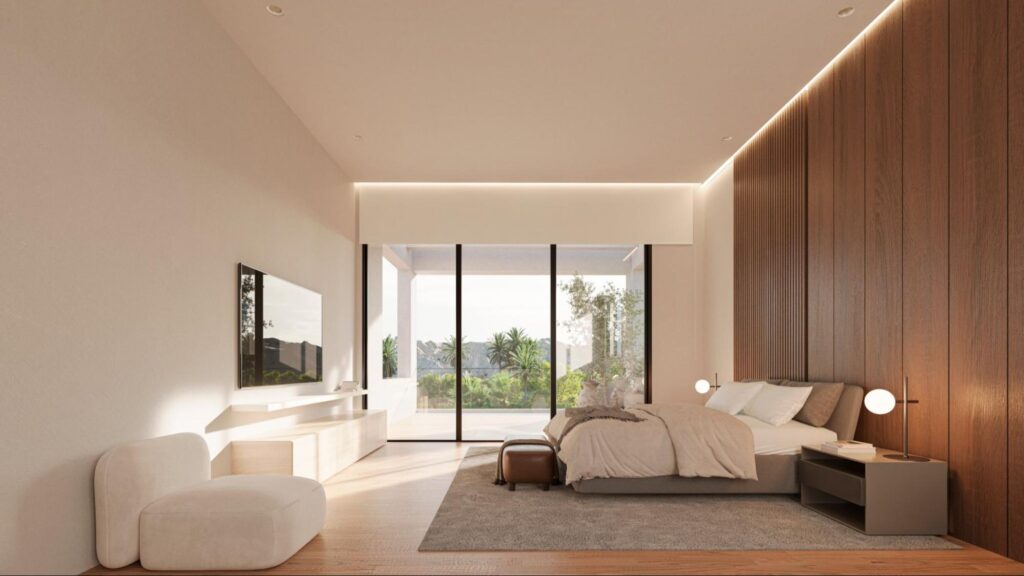
Form asks whether it looks the way you want: the textures, the palette, the finishes, the visual cohesion.
Most homeowners arrive at a renovation or remodel focused on Form.
For many, it's the most visible, the most exciting, the easiest design element to get inspired by. But when a space has Function or Flow problems, a poorly oriented bathroom, a kitchen that doesn't connect to outdoor living, a living area with no clear furniture logic, Form alone cannot fix them. You can invest significantly in an “interior designer in my area” and still end up dissatisfied, because the real work that had to happen was never about the finishes to begin with!
That distinction matters. And it's why the right sequence is just as important as the right professional.
Some spaces have problems that no amount of styling, furnishing, or interior remodeling can resolve. They're architectural; they're embedded in the bones of the building. And misdiagnosing them is where the real money gets lost.
It’s why so many of our projects and properties are completely reimagined. Not that they were bad per se at the start. But fundamentally limited in how they could cater to the modern family.
I've walked into homes where the owners had redecorated two, three times (new furniture, new palette, new lighting fixtures) and still felt like something was off. The room looked fine on paper. But it never felt right. That persistent dissatisfaction is almost always a spatial problem wearing a design costume.
The tells are consistent:
These are spatial problems. An interior decorator can't solve them. An interior designer can identify them. But only an architect (specifically one working at the intersection of architecture and interior architecture) can actually fix them at the root.
That's the real difference between interior design and interior architecture. Interior design works within the fixed constraints of the building. Interior architecture changes those constraints. One refines the space. The other redefines it.
If you've spent any time researching interior design, you've likely come across these two principles. The 3-5-7 rule refers to arranging decorative objects in groupings of odd numbers for visual balance and movement; pure styling, squarely in decorator territory. The 70/30 rule suggests that 70% of a room should express a dominant material, color, or finish, with 30% reserved for contrast (a palette principle that interior designers use to drive cohesive specification).
Both can be useful for the homeowner looking for some guidance. Inside a space that's already working, they help a great interior decorator or designer create something refined and harmonious. But when the spatial foundation is off, when the proportions are wrong, the light doesn't cooperate, or the layout fights how you live, these rules are tools being applied to the wrong problem. Knowing them is valuable. Knowing when they're not enough is more valuable.
4+3x2+3x9 = ?
Order of operations matters!
If you do just one step out of sequence, the outcome is substantially different.
For instance, they call a decorator to refresh the look, realize the space still feels off, bring in an interior designer to rework the layout, and eventually discover the real issues are structural. By then, they've paid multiple rounds of fees, and some of the work has to be undone.
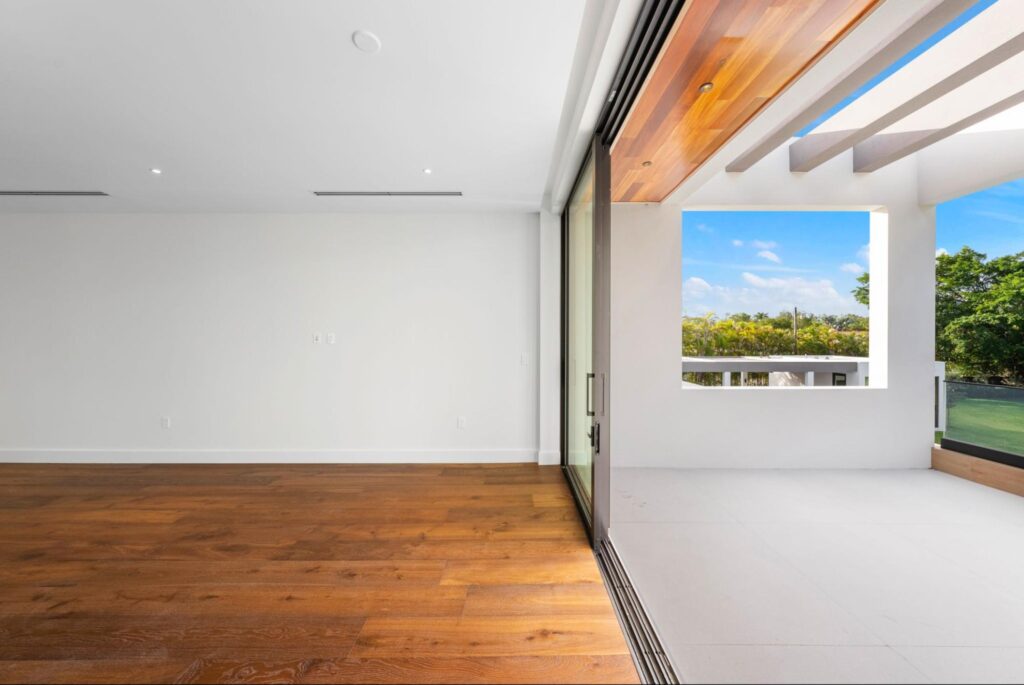
The sequence that actually protects your investment looks like this:
The architects who do this well aren't just drawing walls. They're coordinating lighting, specifying built-in furniture, thinking through cabinetry logic, and setting up the interior designer for success before they arrive. That overlap is intentional. It's where a home goes from well-designed to genuinely livable.
The answer, by the way, is 37. Did you get that - or did you get 43? If you were calculating your tax liability, you'd prefer the lower number right? Not just for the gold star, but because of how it saves you.
So why shouldn’t your home receive the same consideration when the order of things effect the outcome, from lifestyle to potential resale value?
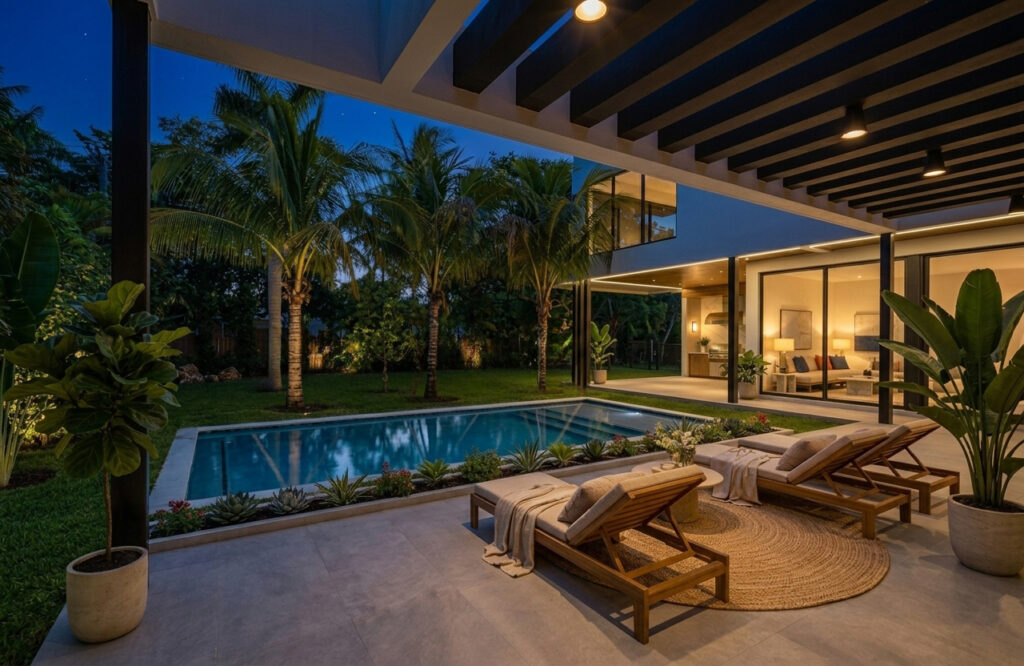
Things like kitchen layout, bathroom design, built-in storage, and lighting coordination directly affect both appraised value and buyer appeal. In Miami's luxury market, buyers at certain price points have expectations that go beyond finishes. They want:
Do them in the wrong order, or not at all, and you’ll miss the mark completely.
If you’re just at the start of your interior remodeling journey, it’s worth giving us a phone call. Let us show you where an architect as your first step can save you more than time and money.
Your home is worth it.
An interior designer handles space planning, finish specifications, cabinetry coordination, lighting coordination, and FF&E, working within the existing structure to improve how a space functions and feels. In Florida, licensed interior designers can also prepare and seal certain construction documents.
Function, Flow, and Form — in that order. Function addresses whether the space supports how you actually live. Flow addresses how movement through the space feels. Form addresses the visual and material experience. Most homeowners focus on Form first, but the most satisfying spaces resolve all three.
A styling principle that recommends grouping decorative objects in odd numbers — three, five, or seven — to create visual balance and natural movement. It's most relevant at the decorator level, applied during the finishing and styling phase.
A guideline suggesting that 70% of a room's palette should reflect a dominant material or color, with 30% dedicated to contrast or accent. Interior designers use this to drive cohesive finish specifications across a project.
Interior design works within the existing constraints of a building. Interior architecture changes those constraints — reconfiguring layouts, repositioning openings, resolving spatial relationships that no amount of styling can address. When the problem is in the bones of the space, interior architecture is where the solution lives.
When the problems you're experiencing feel persistent despite good design — rooms that never quite work, layouts that fight how you live, spaces that feel dark or disconnected regardless of what you do to them. Those are spatial problems, and they require a spatial solution. An architect who works at the level of interior architecture can resolve them at the root, before an interior designer or decorator ever enters the picture.