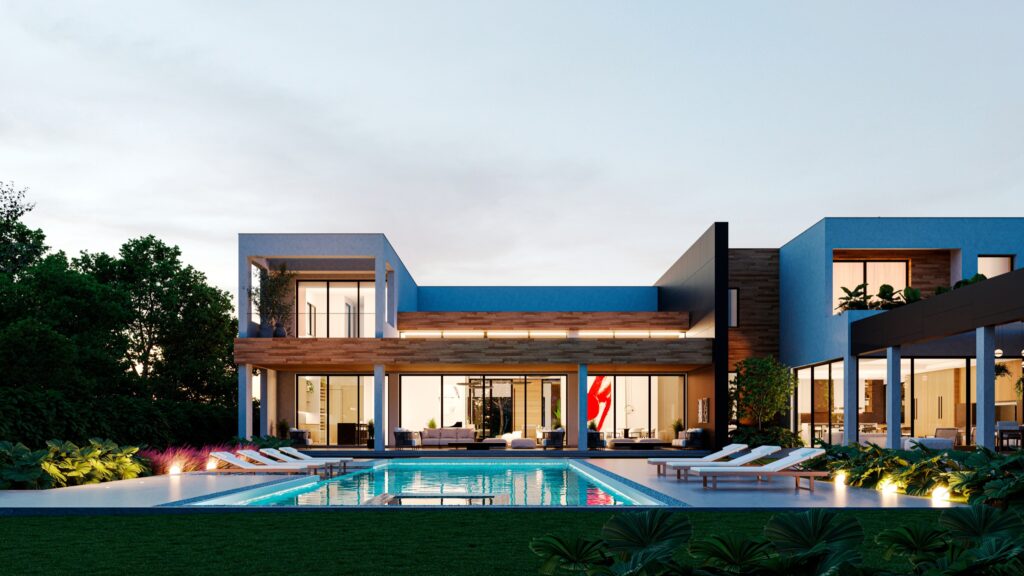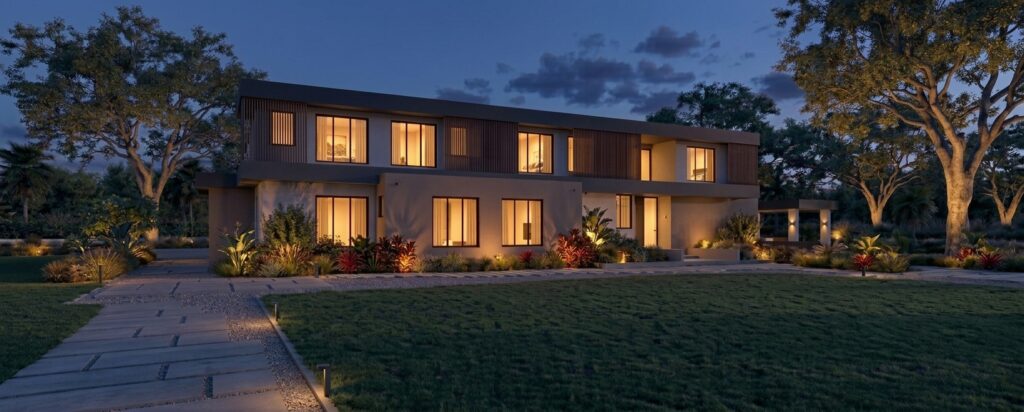
Two things are true for real estate investors when it comes to selling luxury homes in Miami: 1) They will become expensive investments to carry for reasons that will escape you or 2) They will sell 50% faster than market comps, at a higher price, because you thought about the one thing most investors skip.
If you build it they will come, right?
Well, in order to move a home efficiently and at the premium price you’re looking for, you need to think about who “they” are.
If you can get the buyer right and the home sells before the sign goes in the yard. Get the buyer wrong and the most beautiful spec on the block sits through a season of price cuts while your carrying costs bleed the return.
That distinction matters more here than almost anywhere, because the demand is relentless. About 155 people move to Miami every single day with many of those individuals making more than $200K a year. And the more expensive the home (we’re talking about $3M+), the more likely this target closes in cash.
If you're a developer or real estate investor trying to get ahead of that demand, there are a few core concepts you have to get right to make the most of your investment.
At MIK Architecture, our work has won awards for designs while simultaneously breaking neighborhood records for sales prices. In this article, we’ll talk about the buyer and their psychology, but we’ll also walk you through understanding what’s buildable and where.
If you skip this, profit erosion will be a fact of life.
If you nail it, you’ll enjoy boosting your brand’s reputation because you know exactly how to deliver the premium living experience elite buyers are eager to pay for.
After enough years across the table from developers, I've come to believe that the luxury homes in Miami that sell quickly are built for one of two very different people. Build for the wrong one and the trouble starts before the foundation is poured.
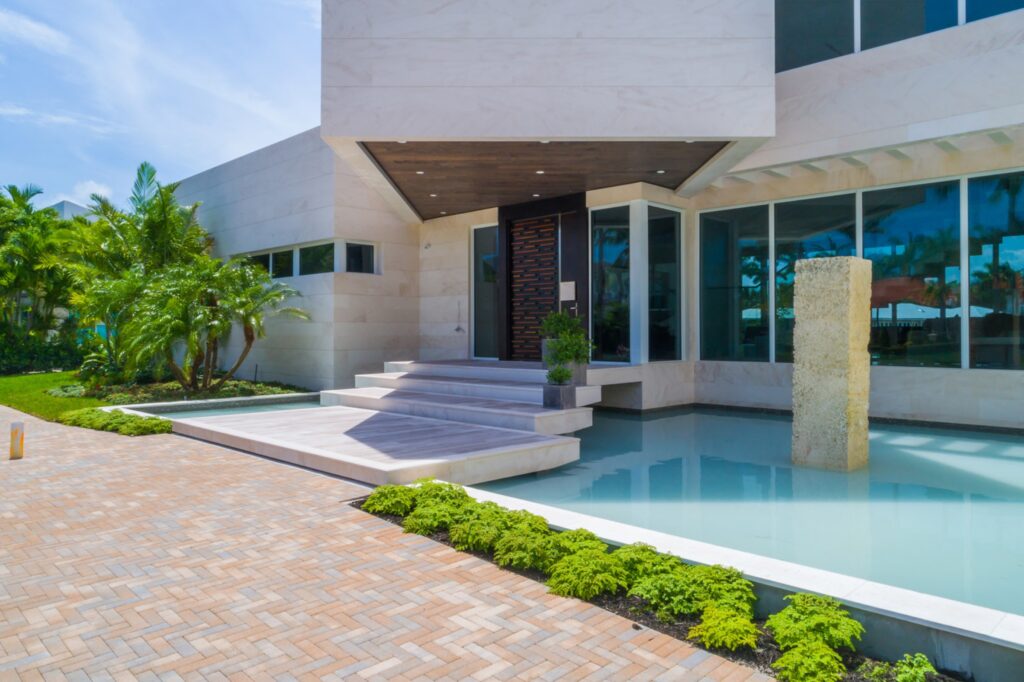
The first is the Tropical Modern buyer - a home style that we specialize in at MIK Architecture. Tropical Modern homes is a more recent branch of modern home design that looks to embrace warm, natural materials (as opposed to the industrial modern concepts of “steel & glass”). Additionally, these materials tend to be locally sourced which helps blend the Tropical Modern home into its environment. There are other benefits, too. Like indoor/outdoor transitions, open floor plans, passive cooling features, flexible utility spaces and so much more.
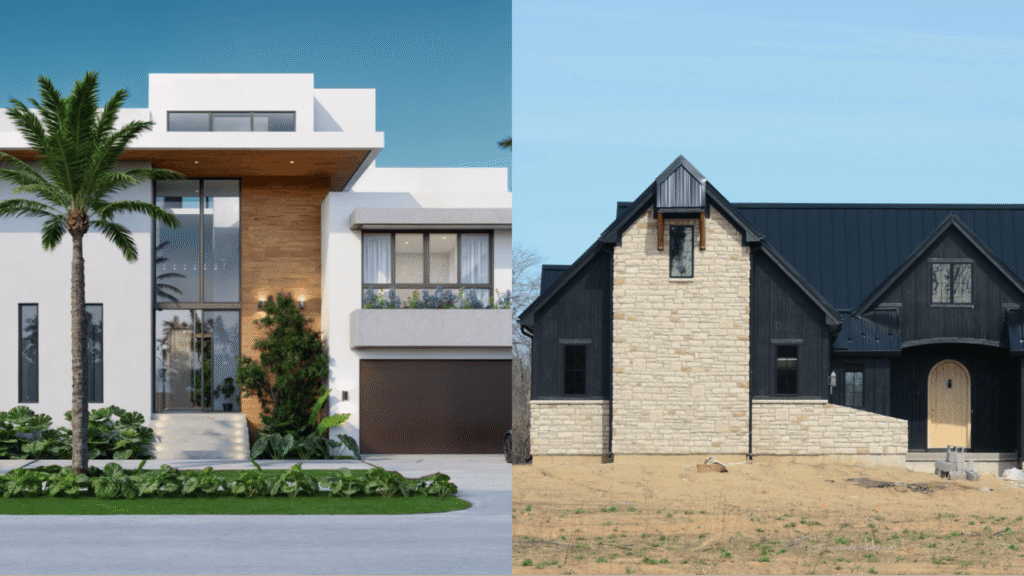
For life in Miami, Tropical Modern is the way to go, especially when tighter urban lots don’t necessarily allow for lots of outdoor living spaces. And this is precisely where the flat roof really shows its benefits. When you can’t go wide, go up. This allows elite buyers the ability to have the outdoor entertaining space of their dreams, even when a “yard” isn’t possible. These types of vertical living spaces can be home to spas, lounges, fire pits, bars, and so much more.
The traditional luxury buyer leans with the opposite instinct. Vaulted ceilings, higher site lines, and a home that feels grounded and familiar - perhaps more like the craftsman-style homes that so many Miami transplants grew up in. In fact, this is a trend that’s taken on the name “Farmhouse Modern,” in recent years and blends traditional design narratives with the openness found in modern design. These homes embrace the sloped roof, which can vary in material, and may or may not be favored by certain city codes.
It should be said that neither one is right or wrong. One will sell faster. And typically for more money. But how do you know which one it is?
The reality is that the luxury homes in Miami that stall typically miss understanding the buyer. And in the City of Miami, that decision runs straight into the code, which is where developers and investors get hung up.
Your roof choice changes what you're legally allowed to construct, and in the City of Miami, the numbers are specific enough to plan around.
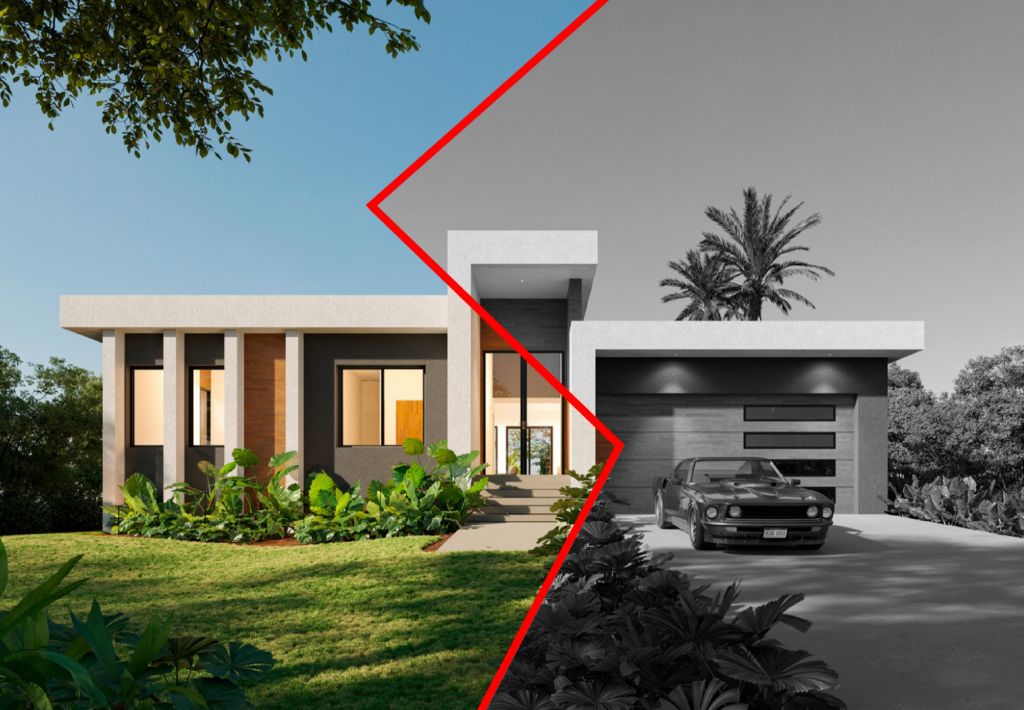
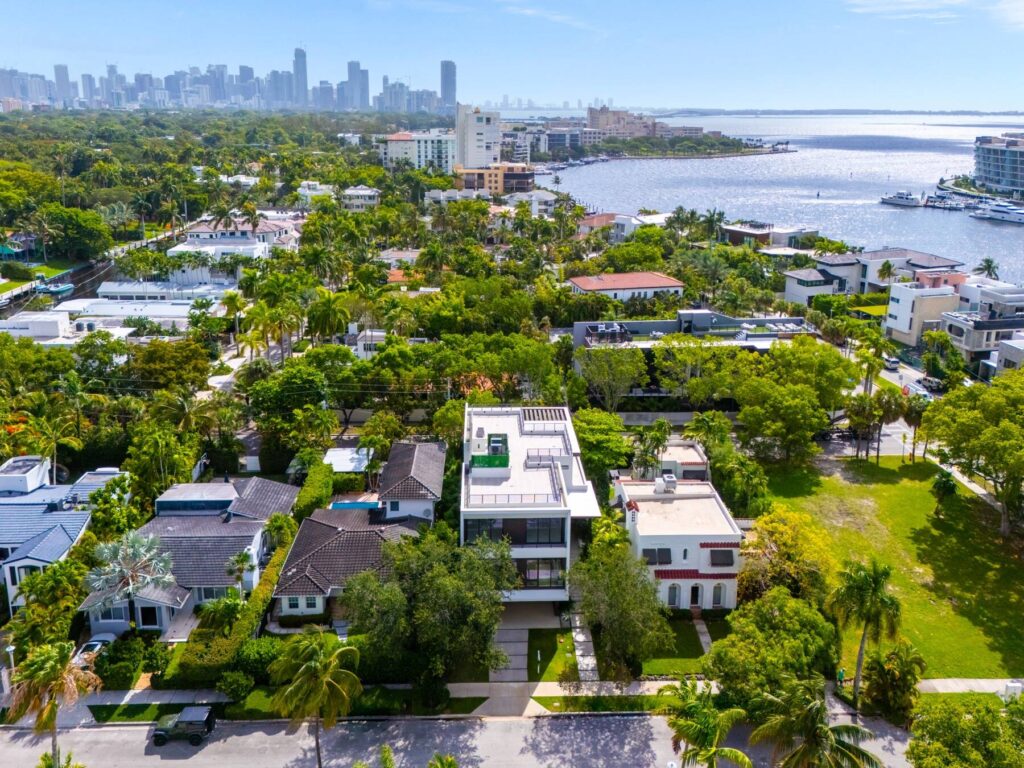
Under Miami 21 zoning in a T3 designation, roof type changes what you can build. A flat roof is capped at two stories and 25 feet, and you can put a rooftop deck at that height. A pitched roof measures 25 feet to the eave and can rise about 10 feet more to the ridge. So the real tradeoff is this: pitched buys you interior volume, meaning vaulted ceilings, and flat buys you a usable rooftop terrace at the height cap. For a view-driven spec in Miami, that rooftop is often the higher-ROI move.
There's a detail underneath that almost nobody explains. In Miami, a flat roof's height is measured to the top of the concrete slab or structural membrane. A pitched roof is measured to the eave, which means it can actually rise higher while keeping the interior volume comparable. That's a City of Miami distinction, and it quietly makes or breaks the inside of a home.

And this is the caveat I never let a client skip: everything I just told you is for luxury homes in Miami only. Pinecrest, Coral Gables, Miami Beach, North Miami, South Miami, and Bay Harbor each write their own codes, and they vary greatly. In some of those cities a pitched roof is measured to the midpoint instead of the eave, which shrinks your interior heights on the exact same design. There is no single county-wide rule. That's precisely why the architect belongs in the room before the deal math is final, not after you've closed on a lot in Miami expecting a rooftop the code down the road would never have allowed.
People ask me which roof is better constantly, and the honest answer is that it isn't a 50/50 question with a universal winner. It depends on the deal, and what you're really choosing is a buyer.
A flat or low-slope roof is the default look of modern Miami, and it unlocks what the Tropical Modern buyer pays for: the rooftop terrace, the clean lines, the indoor-outdoor flow, a solar-ready plane sitting there waiting. Other considerations with a flat roof typically include higher insurance, more drainage and maintenance, and a shorter membrane lifespan. Miami-Dade is a High Velocity Hurricane Zone, so every material needs a Miami-Dade NOA or Florida Product Approval, and a flat roof has to be built for positive drainage, meaning it clears water within 48 hours or an inspector's report stalls your sale.
A sloped or pitched roof, hip or gable, wins on wind performance and insurance, reads more traditional, and gives the traditional luxury buyer the vaulted volume they came for. Hip roofs in particular are the shape insurers favor, and that matters when Florida premiums already run two to three times the national average. The tradeoff is that a pitched roof costs you the rooftop. Build one in a Miami enclave where buyers expect a panoramic deck and you've hurt your own resale. Some of the best-performing luxury homes in Miami live or die on getting this single call right.
In fact, one recent study from the National Association of Home Builders found that the market is overwhelmingly in favor of such outdoor living areas like elevated patios and entertainment spaces.
Plenty of people treat real estate investing in Miami as a spreadsheet of neighborhoods and comps, then wonder why their finished spec sits. Location gets you into the game. But design decides how fast you get out of it, and at what number. Carrying costs are real, and the fastest-selling luxury homes in Miami are the ones where the roof, the ceilings, and the terrace were matched to a real buyer, inside the real code, before the first line was drawn.
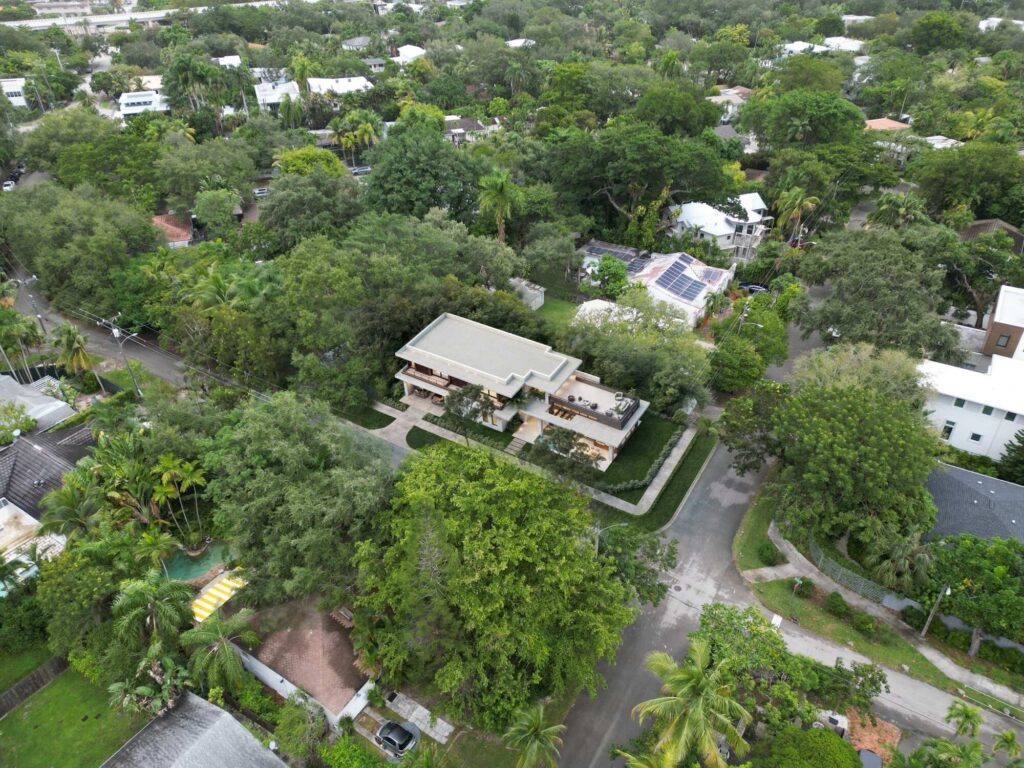
If you look at the data by way of neighborhoods and the predominant designs found in them, you’ll notice that traditional luxury homes are on the market for over 100 days, while neighborhoods that are comprised of more modern design move in about half the time.
Again, real estate investing in Miami isn’t always about location. It’s about the style that’s preferred in that location because of how they match buyer aspirations and lifestyle.
The real estate investor hopeful watches a show at 2 a.m. about luxury homes in Miami on HGTV. They see a prepped site go from dirt to sale-ready lux home in about 72 hours, and they get excited about the possibility. All it takes is a construction loan, right?
Next comes the frantic Zillow search for a lot with something that can be remodeled. The deal is closed. The trades are hired. The renovation begins. And the city shows up turning the 72-hour dream into a year-long nightmare!
The “line item” on the investor’s spreadsheet that was eliminated first, but would have saved them completely, is almost always the architect.
The smartest real estate investors we’ve worked with found their footing through experience or places like the Miami Real Estate Investors Association where they traded notes on lots, lenders, and which trades to trust.
Many members of the Miami Real Estate Investors Association put architects at the top of their call list because they know that this phone call will determine whether their real estate investment will print or burn money.
It’s unfortunate when most developers call me; the expensive decisions are already made, and often made wrong. The lot was bought without checking what the local Miami code lets the roof become (let alone everything else). The style was picked from a mood board or Instagram post with the “most likes” when in reality… the permit office doesn’t “like” that design at all!
The lesson here for luxury homes in Miami is this: Bring the architect in first and every one of those becomes a decision made on purpose, which is the only predictable way we know to drive maximum returns on your real estate investment.
Of course, location matters, but buyer psychology, zoning, insurability, and lifestyle matter more than most developers give them credit for.
It’s the difference between a fix-n-flip and world-class ROI and brand reputation.
The best luxury homes in Miami are the latter.
There’s more to a flat roof than just a design cue. It’s a functional feature that helps your property reach its highest market value. In Miami, the right roof was never a construction decision. It's an investment strategy, and it starts by knowing your buyer, then designing inside exactly what the City of Miami code allows.
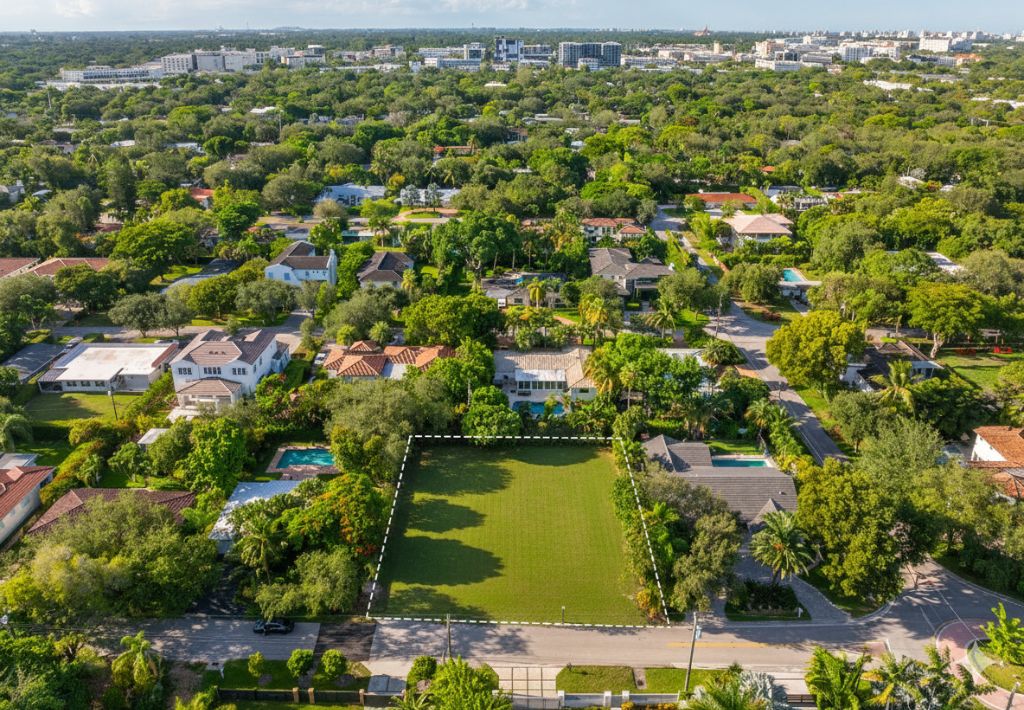
If you're eyeing a lot and want to know what it can actually become, and which buyer it should be built for, that's the conversation I have with developers before they break ground on luxury homes in Miami. Bring me the address and the numbers you're working with, and I'll tell you honestly what the highest-velocity version of that home looks like.